Many people assume that paying tax through PAYE means they never need to complete a Self Assessment tax return. While this is true for many employees, others may need to register with HM Revenue & Customs (HMRC) because they have additional income or tax responsibilities that cannot be handled through PAYE alone.
Understanding whether you need to register is an important first step. Registering when required helps you meet HMRC obligations, avoid unnecessary penalties, and ensure your tax affairs are managed correctly.
This guide explains who normally needs to register for Self Assessment, when registration is required, and what happens after you notify HMRC.
What Does Registering for Self Assessment Mean?
Registering for Self Assessment tells HMRC that you need to submit a tax return because your tax cannot be collected entirely through PAYE.
After registering, HMRC will usually issue you with a Unique Taxpayer Reference (UTR) if you do not already have one. This number allows you to manage your Self Assessment account and submit your annual tax return online.
Registering does not automatically mean you owe additional tax. It simply allows HMRC to calculate your overall tax position based on your income, reliefs, and allowances.
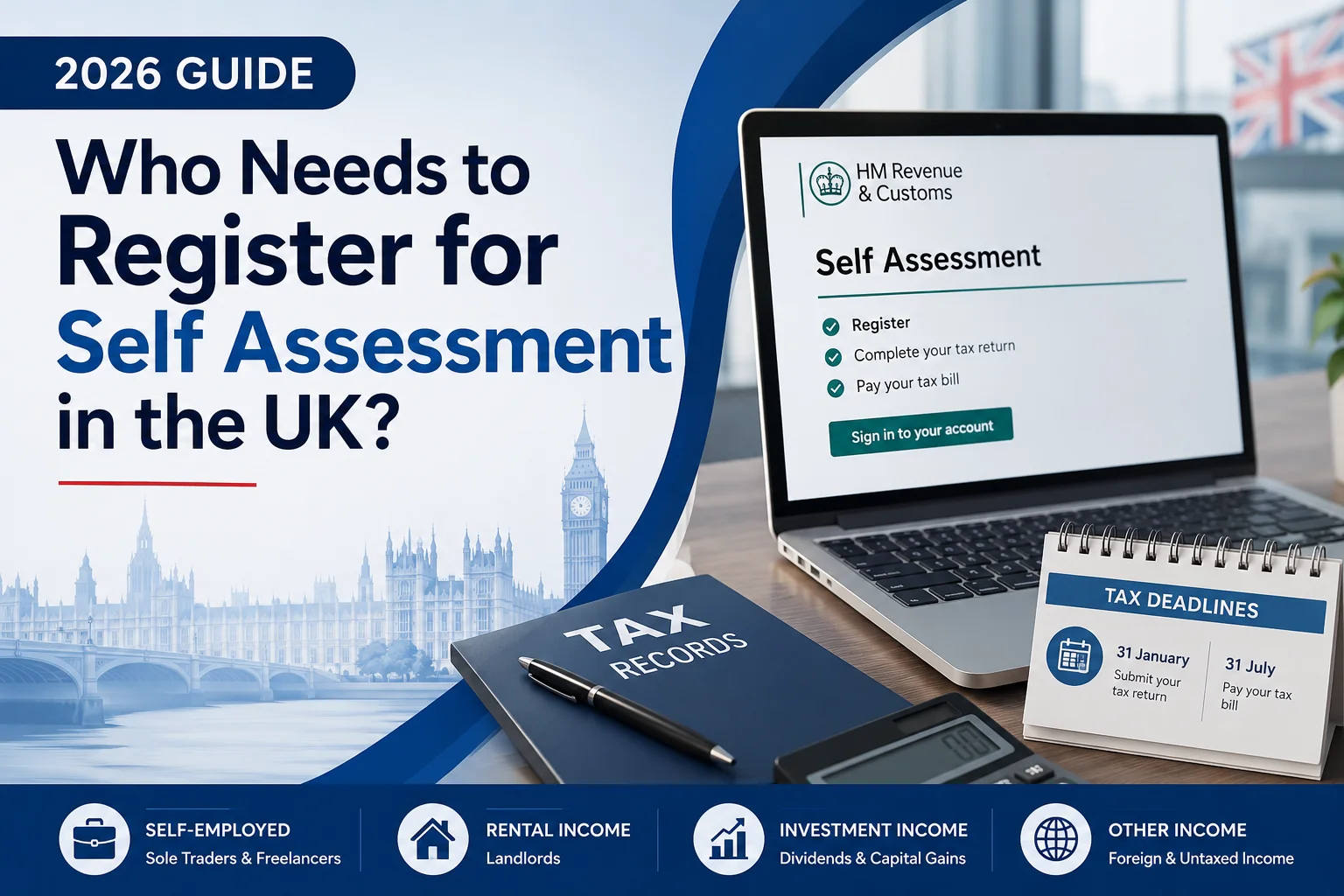
Who Normally Needs to Register for Self Assessment?
Whether you need to register depends on your individual circumstances and the type of income you receive during the tax year. Some of the most common situations include the following.
Sole Traders
If you start working for yourself as a sole trader, you may need to register for Self Assessment so you can report your business income and allowable expenses. Examples include:
- Freelancers
- Consultants
- Tradespeople
- Online sellers
- Self-employed professionals
Keeping accurate business records throughout the year makes completing your tax return much easier.
Business Partners
Individuals who are members of a business partnership generally need to register for Self Assessment to report their share of the partnership’s profits.
Each partner remains responsible for their own personal tax return, even though the partnership itself may also have reporting obligations.
Landlords Receiving Rental Income
Many landlords need to complete a Self Assessment tax return to report rental income from residential or commercial property. Depending on your circumstances, you may also need to report:
- Property expenses
- Mortgage interest (where applicable)
- Capital improvements
- Rental profits
Good record-keeping throughout the year helps ensure income and allowable expenses are reported accurately.
Individuals Receiving Untaxed Income
Registration may also be necessary if you receive income that has not already been taxed through PAYE. Examples include:
- Commission
- Investment income
- Dividends
- Foreign income
- Certain savings income
- Other taxable income received outside employment
Not every type of additional income requires a tax return, but it is important to check your individual position.
People Who Have Capital Gains to Report
Selling or disposing of certain assets may create a Capital Gains Tax liability. Where gains need to be reported through Self Assessment, registration may be required if you are not already within the system. Examples can include:
- Investment assets
- Shares
- Certain business assets
- Property in some circumstances
Individuals Affected by the High Income Child Benefit Charge
Some individuals may need to register if they are responsible for paying the High Income Child Benefit Charge and it cannot be collected through PAYE. Your overall circumstances determine whether a Self Assessment return is required.
Who May Not Need to Register?
Many UK taxpayers do not need to register for Self Assessment. You may not normally need to register if:
- All your income is taxed correctly through PAYE.
- You have no additional taxable income that must be reported.
- HMRC has not asked you to complete a tax return.
- Your tax affairs are straightforward and fully dealt with through your employer or pension provider.
However, tax circumstances can change from year to year. Starting a side business, buying a rental property, or receiving foreign income may create new reporting obligations.
When Should You Register?
If you need to submit a Self Assessment tax return for the first time, you should register as early as possible after the end of the relevant tax year. Leaving registration until the deadline can create unnecessary stress and may delay access to your online account. Early registration gives you time to:
- Receive your UTR.
- Set up your online tax account.
- Gather supporting records.
- Prepare your return carefully.
Planning ahead also reduces the likelihood of last-minute errors.
What Information Will You Need?
Before registering, it is helpful to have basic information available, including:
- Full name
- Date of birth
- National Insurance number
- Current address
- Contact details
- Information about your business or additional income (where applicable)
Having accurate information available helps make the registration process smoother.
Common Registration Mistakes
Many first-time taxpayers make avoidable mistakes during registration. Some of the most common include:
- Assuming PAYE covers every source of income.
- Waiting until the filing deadline before registering.
- Forgetting to report side income.
- Keeping incomplete financial records.
- Ignoring letters received from HMRC.
- Assuming overseas income does not need to be considered.
- Registering late after becoming self-employed.
Taking time to understand your responsibilities early can help prevent unnecessary penalties or delays.
When Should You Seek Professional Advice?
Some tax situations are more complex than others. Professional advice may be particularly helpful if you have:
- Multiple sources of income
- Self-employment income
- Rental property income
- Foreign income
- Capital gains
- Company director responsibilities
- Partnership income
- Questions about tax reliefs or allowable expenses
A tax professional can help determine whether registration is required and ensure your tax affairs are handled correctly.
How SHRM Tax Advisors Can Help
Understanding your Self Assessment obligations is often easier with professional guidance. SHRM Tax Advisors supports individuals, landlords, sole traders, company directors, and business owners with a wide range of UK tax services, including Personal Tax Planning and Self Assessment support. The team can help you:
- Understand whether you need to register.
- Review your tax position.
- Prepare for your first Self Assessment return.
- Organise supporting records.
- Identify available tax reliefs and allowances.
- Meet HMRC deadlines with confidence.
Seeking advice early can make the entire process more straightforward and reduce the risk of avoidable errors.
Final Thoughts
Registering for Self Assessment is an important responsibility for many UK taxpayers whose tax affairs extend beyond standard PAYE employment.
Whether you are self-employed, receive rental income, have foreign earnings, or earn income from other sources, understanding your obligations early can help you avoid unnecessary stress and remain compliant with HMRC requirements.
If you are unsure whether you need to register, seeking professional advice can provide clarity and help ensure your tax affairs are managed correctly.